Economists have advised the Malawi Government to focus on implementing reforms, restoring fiscal discipline and rebuilding confidence in the economy as it discusses a new deal with the International Monetary Fund (IMF).
The IMF mission is expected in Malawi from June 9 to 18 to discuss a possible new Extended Credit Facility (ECF) after the previous four-year $175 million (about K306 billion) arrangement expired in May 2025 without completing a review.
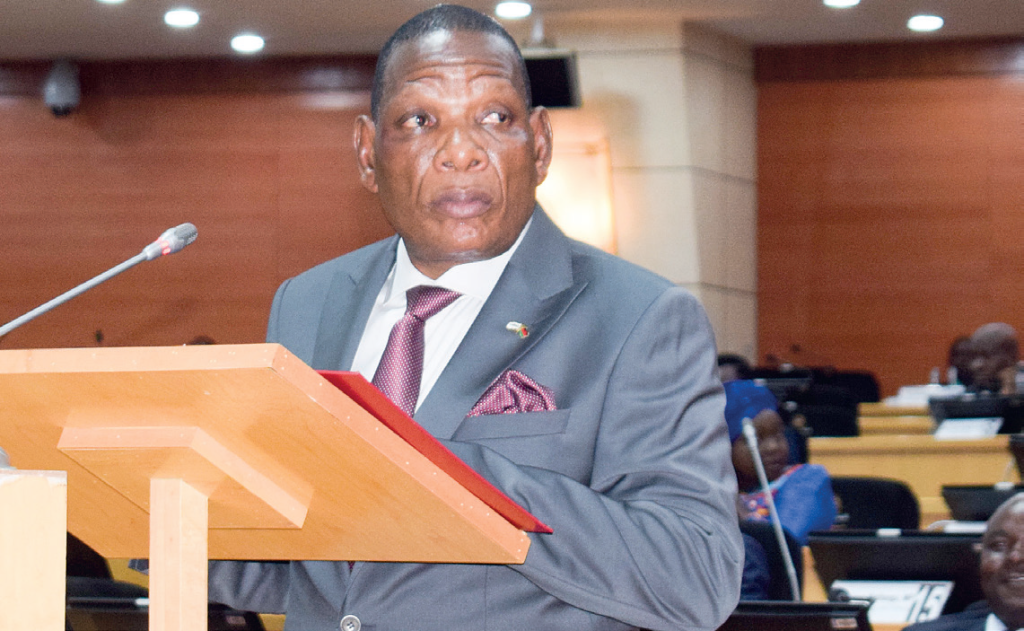
In a written response on Thursday, politician-cum-development economist Dalitso Kabambe noted that Malawi has repeatedly struggled with policy consistency, fiscal discipline and implementation of agreed reforms under successive ECF arrangements.
The UTM Party president, who served as Reserve Bank of Malawi governor between April 2017 and July 2020, said the country’s experience with previous IMF-supported programmes has shown that securing a deal alone is not an achievement as the real test is on implementation.
He said: “Economic stabilisation cannot come at the expense of vulnerable households. As UTM Party, our position is that Malawi needs a serious home-grown recovery strategy supported by international partners, not an IMF programme treated as a political announcement or public relations exercise.
“The IMF can support reform, but it cannot substitute leadership, discipline, competence and execution. What Malawi needs now is not another cycle of promises, but credible delivery, restored confidence and a serious long-term strategy for economic transformation.”
In a separate interview, public finance expert Dalitso Kubalasa said lessons from the failed 2023 ECF that government treated like a checklist for donors rather than a contract with Malawians, should guide the next round of negotiations.
He said while fiscal discipline should be intentional and backed by firm rules to prevent expenditure overruns and growing debt, the country also needs to adopt a more realistic exchange rate framework and stronger social protection measures to cushion vulnerable households during reforms.
Said Kubalasa: “This time, we must ensure we do business unusual, and that starts with three non-negotiable shifts based on the following major lessons: fiscal discipline cannot be episodic and accidental, it needs to be intentional; exchange rate and forex market realism is critical; and social protection, as a programme anchor and not an afterthought, needs strong consideration.
“Government must always have an inclusive pre-negotiated consensus on a reform compact with domestic stakeholders [Parliament, private sector and civil society] well before the IMF mission arrives.”
Meanwhile, Malawi Economic Justice Network executive director Bertha Phiri has urged government to demonstrate tangible progress on fiscal consolidation before expecting a new deal.
She said authorities should also show progress in revenue collection, expenditure control and preventing the accumulation of new arrears, while strengthening governance measures, including transparency in fuel levy collections, asset declarations and public procurement.
Said Phiri: “The June meetings are a chance to reset. On the same note, the IMF’s July 2025 Article IV flagged persistent issues: a 10.1 percent fiscal deficit, 88 percent debt-to-GDP ratio, forex shortages and 27.7 percent inflation in May 2025.
“Malawi Government ought to show a concrete picture of fiscal consolidation, not just plans anymore. IMF would want to see how much the deficit has been narrowed and arrears stopped.”
The recommendations come as Malawi continues to grapple with high inflation, foreign exchange shortages and rising public debt.
Malawi secured the IMF deal to stabilise the economy by unlocking direct budget support from multilateral institutions such as the European Union, the World Bank and the African Development Bank.
The government implemented a series of reforms that Capital Hill said were tough, but necessary to convince development partners that it was committed to revitalising the economy, including raising the policy rate and devaluing the kwacha.
Reform efforts under the suspended ECF focused on returning the country to a sustainable fiscal path, rebuilding external buffers, restoring debt sustainability and external viability while mitigating the effects of El Niño-induced shocks.
At the time of the ECF’s termination in May 2025, economic challenges, including inflation currently at 30.7 percent and foreign exchange shortages, remained.
On Thursday, Minister of Finance, Economic Planning and Decentralisation Joseph Mwanamvekha told The Nation that the government is seeking a “win-win” agreement with the IMF that supports economic recovery while protecting vulnerable households.
“We will not accept any reforms that will harm the very people we want to protect,” he said.
The IMF has previously indicated that progress on exchange rate reforms, debt sustainability and broader fiscal management will be key considerations in discussions on a new programme.
Major obstacles to clinching a new ECF, at least in the context of the IMF’s 2025 Article IV consultation with Malawi, included exchange rate policy.
Malawi Government data show that the current public debt stock stands at K23.9 trillion, equivalent to 90.9 percent of gross domestic product as of December 2025. Of this amount, 65 percent is domestic debt, translating to K16 trillion.
The ECF is a medium-term IMF lending arrangement designed for low-income countries facing prolonged balance-of-payments difficulties. The programme typically provides concessional financial support alongside policy reforms aimed at strengthening fiscal discipline, improving public financial management and restoring economic stability.